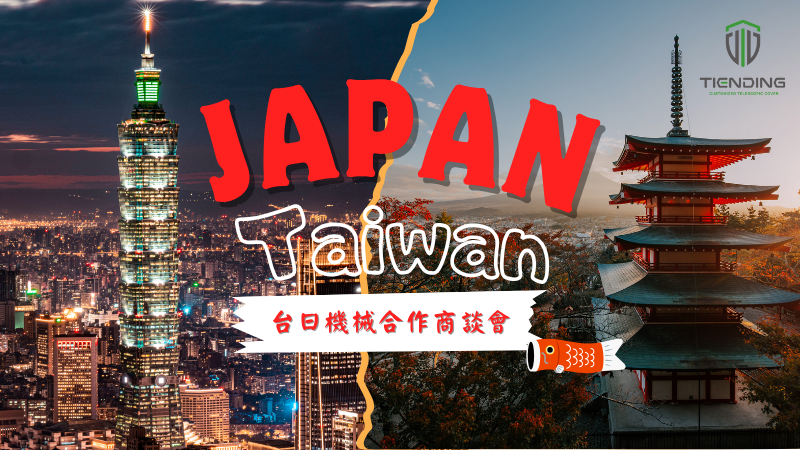
Tien Ding Participates in the Taiwan–Japan Machinery Business Meeting for the Third Consecutive Year
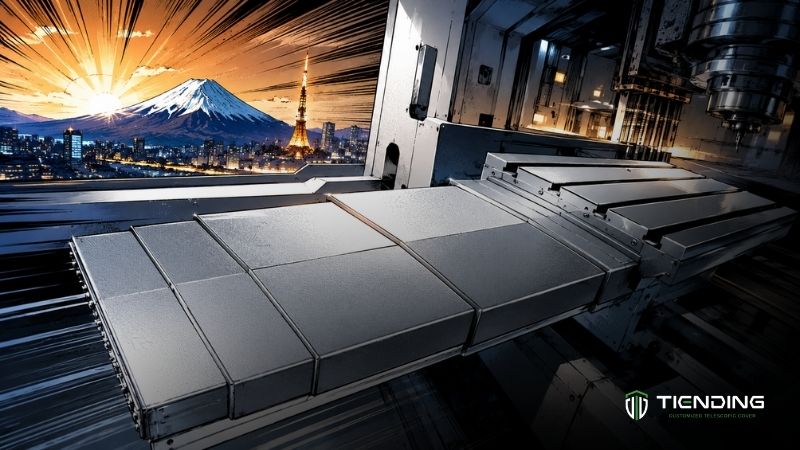
Strengthening Its Presence in Japan Through Customized Telescopic Cover Solutions
Tien Ding Industrial Co., Ltd. has participated in the Taiwan–Japan Machinery Business Meeting for the third consecutive year, continuing its engagement with Japanese machine tool builders, machinery manufacturers, and trading companies.
Through face-to-face technical discussions and project requirement reviews, Tien Ding aims to introduce more Japanese companies to Taiwan’s capabilities in customized telescopic cover design, manufacturing, and supply chain integration, while building stable, long-term business relationships.
Table of Contents
- Why Does Tien Ding Continue to Participate in the Taiwan–Japan Machinery Business Meeting?
- What Do Japanese Machine Tool Builders Look for When Sourcing Telescopic Covers?
- What Telescopic Cover Services Can Tien Ding Provide to Japanese Machine Builders?
- How Should Japanese Customers Choose the Right Cooperation Model?
- What Are the Differences Between Telescopic Cover Cooperation Models?
- How Does Tien Ding Respond to Japan’s Requirements for Quality and Stability?
- Three Consecutive Years of Participation Reflect Tien Ding’s Long-Term Commitment to Japan
- Can Japanese Machine Builders That Did Not Attend the Event Still Contact Tien Ding?
- Tien Ding’s Telescopic Cover Cooperation Process
- Frequently Asked Questions
- Continuing to Develop the Japanese Market and Build Long-Term Partnerships
Why Does Tien Ding Continue to Participate in the Taiwan–Japan Machinery Business Meeting?
Tien Ding’s purpose in attending the Taiwan–Japan Machinery Business Meeting goes beyond pursuing one-time purchase orders. The company sees the event as an opportunity to gain a deeper understanding of the Japanese machine tool industry’s product requirements, quality expectations, and preferred forms of cooperation.
The 2026 Taiwan–Japan Machinery Business Meeting was held in Tokyo on June 8 and Nagoya on June 10. Led by the Taiwan Association of Machinery Industry, the delegation included 25 Taiwanese machinery companies and 45 representatives, who conducted more than 180 one-on-one business meetings with 27 Japanese companies. Tien Ding was among the participating Taiwanese companies.
This marked Tien Ding’s third consecutive year at the event.
Through continued participation, Tien Ding has maintained contact with prospective customers and industry partners in Japan. Discussions have gradually progressed from introductory product presentations to drawing reviews, technical evaluations, and confirmation of practical cooperation terms.
The Japanese market places strong emphasis on consistent quality, design details, delivery management, and long-term trust. Through continuous and practical communication, Tien Ding hopes to help Japanese customers better understand the customized engineering capabilities and manufacturing flexibility available from a Taiwanese telescopic cover manufacturer.
What Do Japanese Machine Tool Builders Look for When Sourcing Telescopic Covers?
A telescopic cover is not merely an external machine protection component. Its design directly affects machine motion, guideway protection, maintenance accessibility, and long-term operating stability.
When Japanese machine tool manufacturers evaluate telescopic cover suppliers, they commonly consider the following questions:
- Can the supplier provide customized designs for different machine structures?
- Can the cover structure be adjusted according to machine travel, speed, and installation space?
- Can it prevent chips, coolant, and foreign particles from entering the machine?
- Can it reduce impact, noise, and abnormal wear during high-speed operation?
- Can the supplier support new machine development, improvement of existing models, and after-sales maintenance?
- Does the supplier have reliable production capacity, quality inspection procedures, and effective technical communication?
Through the business meeting, Tien Ding seeks to understand the actual needs of Japanese machine builders directly and to develop relationships that go beyond quotation-based purchasing toward co-design and long-term supply cooperation.
What Telescopic Cover Services Can Tien Ding Provide to Japanese Machine Builders?
Tien Ding specializes in the design and manufacturing of telescopic covers for machine tools. Each project can be evaluated according to the customer’s machine drawings, installation requirements, and operating environment.
Core Service Capabilities
| Service | What Tien Ding Can Provide |
|---|---|
| Customized design | Design based on machine structure, travel, installation space, and protection requirements |
| Co-development for new machines | Discussion of mounting interfaces and cover structures during new machine development |
| Improvement of existing products | Recommendations for covers with poor motion, excessive noise, misalignment, impact, or insufficient durability |
| Drawing and technical review | Confirmation of mounting interfaces, extended length, compressed length, and motion conditions |
| Prototyping and testing | Prototype production, testing, and design revision based on project requirements |
| Volume production | Mass production and quality management after design and prototype approval |
| After-sales technical support | Assistance with installation, operation, and service-related issues |
Tien Ding’s telescopic covers can be applied to a wide range of equipment, including:
- Vertical machining centers
- Horizontal machining centers
- Gantry machining centers
- Vertical turning lathes
- Five-axis machine tools
How Should Japanese Customers Choose the Right Cooperation Model?
Different machine tool manufacturers are at different stages of product development, so the most suitable cooperation model may vary.
When Developing a New Machine Model
Machine builders are encouraged to provide relevant drawings and expected motion conditions during the early design stage. Both parties can then review:
- Telescopic cover installation space
- Machine travel
- Operating speed
- Mounting method
- Structural interfaces
Introducing telescopic cover engineering early can reduce the risk of discovering insufficient space, interference, or poor movement after machine assembly has already been completed.
When Existing Telescopic Covers Fail Frequently
Customers may provide:
- Existing drawings
- Product photographs
- Failure locations
- Operating environment
- Usage conditions
Tien Ding can then analyze possible causes, such as:
- Misaligned mounting interfaces
- Incorrect extended or compressed dimensions
- Unsynchronized panel movement
- Worn guidance structures
- Impact caused by high-speed motion
- Internal chip or coolant intrusion
Based on the actual condition, Tien Ding can recommend appropriate structural improvements.
When Seeking a Second Source
Japanese machine tool manufacturers can begin with drawing evaluation and sample testing for an existing machine model. After confirming quality, installation fit, and motion performance, cooperation can gradually be expanded to additional models and larger supply volumes.
When Reducing Overall Procurement Risk
Supplier evaluation should consider more than the unit purchase price. Important factors include:
- Technical feasibility
- Quality consistency
- Communication efficiency
- Delivery planning
- Long-term technical support
What Are the Differences Between Telescopic Cover Cooperation Models?
| Cooperation Model | Suitable Situation | Main Scope |
|---|---|---|
| Build-to-print manufacturing | The customer already has complete drawings | Manufacturing feasibility review and quotation based on customer drawings |
| Co-design | A new machine model is under development | Joint review of structure, interface, travel, and motion conditions |
| Existing product improvement | Current covers have operational problems or insufficient durability | Failure analysis and structural improvement recommendations |
| Prototype testing | The customer wants to verify quality before mass production | Prototype production followed by installation and motion testing |
| Second-source development | The customer wants to reduce supply chain risk | Validation starting with one machine model, followed by gradual expansion |
| Long-term supply cooperation | Design and quality have already been approved | Stable mass production, delivery, and quality management |
For Japanese customers, Tien Ding aims to serve not only as a telescopic cover manufacturer, but also as a technical partner capable of participating in product design, problem analysis, and production implementation.
How Does Tien Ding Respond to Japan’s Requirements for Quality and Stability?
The Japanese market places high expectations on product details, manufacturing consistency, and long-term operating stability.
For each telescopic cover project, Tien Ding reviews factors such as:
- Customer drawings and mounting interfaces
- Machine travel and compressed dimensions
- Panel structure and motion sequence
- Operating speed and cycle frequency
- Chip and coolant conditions
- Mounting method and assembly requirements
- Maintenance and replacement needs
- Packaging, transportation, and delivery method
Where customers have specific requirements for materials, inspection, testing, or documentation, these can be raised during the initial project stage so both parties can evaluate feasibility together.
Tien Ding believes that telescopic cover quality depends not only on manufacturing precision, but also on early design planning, confirmation of actual operating conditions, and thorough technical communication between both parties.
Three Consecutive Years of Participation Reflect Tien Ding’s Long-Term Commitment to Japan
The Taiwan–Japan Machinery Business Meeting has become an important regular platform for exchange between machinery companies in Taiwan and Japan.
The relationship between the two industries extends beyond competition. There is considerable potential to combine Japan’s craftsmanship and quality standards with Taiwan’s flexible manufacturing capabilities. In recent years, cooperation has also expanded beyond conventional component trading into:
- Joint research and development
- Co-design
- Branding
- Distribution
- Supply chain cooperation
For Tien Ding, participating for the third consecutive year demonstrates that its development of the Japanese market is not a short-term experiment, but a long-term strategic commitment.
Every meeting provides an opportunity to better understand customer needs, improve communication methods, and build market trust. Even when some projects remain in the initial contact or technical evaluation stage, Tien Ding continues to maintain communication with prospective customers and explore cooperation models that benefit both parties.
The company also values feedback from Japanese customers, trading firms, and industry partners as a way to further improve product design, quality management, and international service capabilities.
Can Japanese Machine Builders That Did Not Attend the Event Still Contact Tien Ding?
Yes.
Japanese machine tool manufacturers, equipment suppliers, and professional trading companies that were unable to attend the meetings in Tokyo or Nagoya are still welcome to contact Tien Ding directly.
Whether the company is:
- Developing a new machine model
- Searching for a telescopic cover supplier
- Evaluating a second source
- Improving problems with an existing cover
the following information can support an initial evaluation:
- Machine type and model
- Telescopic cover drawings or on-site photographs
- Maximum extended length and minimum compressed length
- Machine travel and operating speed
- Mounting interface and fastening method
- Operating environment and current problems
- Estimated quantity and development schedule
Tien Ding will conduct an initial review based on the available information and then confirm the next steps for drawing evaluation, prototyping, or quotation.
Tien Ding’s Telescopic Cover Cooperation Process
Step 1: Provide Project Information
The customer provides:
- Machine drawings
- Installation space
- Machine travel
- Operating speed
- Operating environment
- Estimated quantity
Step 2: Technical Evaluation
Tien Ding reviews:
- Structural feasibility
- Mounting interfaces
- Protection requirements
- Potential design risks
Step 3: Drawing Confirmation
Both parties confirm:
- Main dimensions
- Mounting method
- Motion direction
- Relevant technical conditions
Step 4: Prototype Production and Testing
A prototype may be produced according to project requirements, followed by installation and motion testing.
Step 5: Design Revision
The structure, dimensions, or related components are adjusted based on test results.
Step 6: Mass Production and Delivery
After final approval, production, inspection, packaging, and shipment are arranged according to the agreed requirements.
Step 7: Ongoing Technical Support
Tien Ding provides the necessary technical assistance for installation, operation, and maintenance issues.
Frequently Asked Questions
Q1: Can Tien Ding co-develop new machine models with Japanese machine tool builders?
Yes. Customers are encouraged to provide machine layouts, mounting interfaces, machine travel, and operating speed during the early design stage. This allows both parties to confirm the space and structure required for the telescopic cover before the machine design is finalized.
Q2: Can Tien Ding evaluate a project if only photographs of the existing cover are available?
Yes. Tien Ding can begin with existing photographs, key dimensions, and machine information, and then determine whether additional measurement or documentation is required.
Q3: Can one prototype be produced for testing before mass production?
Prototype production can be evaluated according to the project scope. Prototype confirmation typically includes:
- Dimensions
- Mounting interfaces
- Extended and compressed conditions
- Actual motion performance
Q4: Can Tien Ding help improve operational problems with existing telescopic covers?
Yes. Customers may provide photographs or videos of the issue, failure locations, service time, and machine operating conditions. Tien Ding can analyze the available information and recommend possible improvement directions.
Q5: Can Japanese customers arrange an online meeting even if they did not attend the business meeting?
Yes. Japanese customers can contact Tien Ding through email or the company website and provide information about the machine model and requirements they wish to discuss. An online meeting can be arranged first, followed by drawing and technical reviews as the project progresses.
Continuing to Develop the Japanese Market and Build Long-Term Partnerships
Tien Ding Industrial Co., Ltd. will continue investing in the Japanese market and actively building relationships with:
- Japanese machine tool manufacturers
- Machinery and equipment companies
- Component suppliers
- Professional trading firms
Through customized telescopic cover design, stable manufacturing capabilities, and practical technical communication, Tien Ding aims to help customers improve:
- Machine protection
- Motion stability
- Maintenance performance
- Long-term reliability
If your company is searching for a telescopic cover supplier, a co-development partner, or a second source, you are welcome to provide machine drawings, product photographs, travel requirements, installation space, and estimated quantities for further discussion.
Contact Tien Ding to explore opportunities for cooperation and develop machine tool protection solutions tailored to the requirements of the Japanese market.
Catagory
Recent News
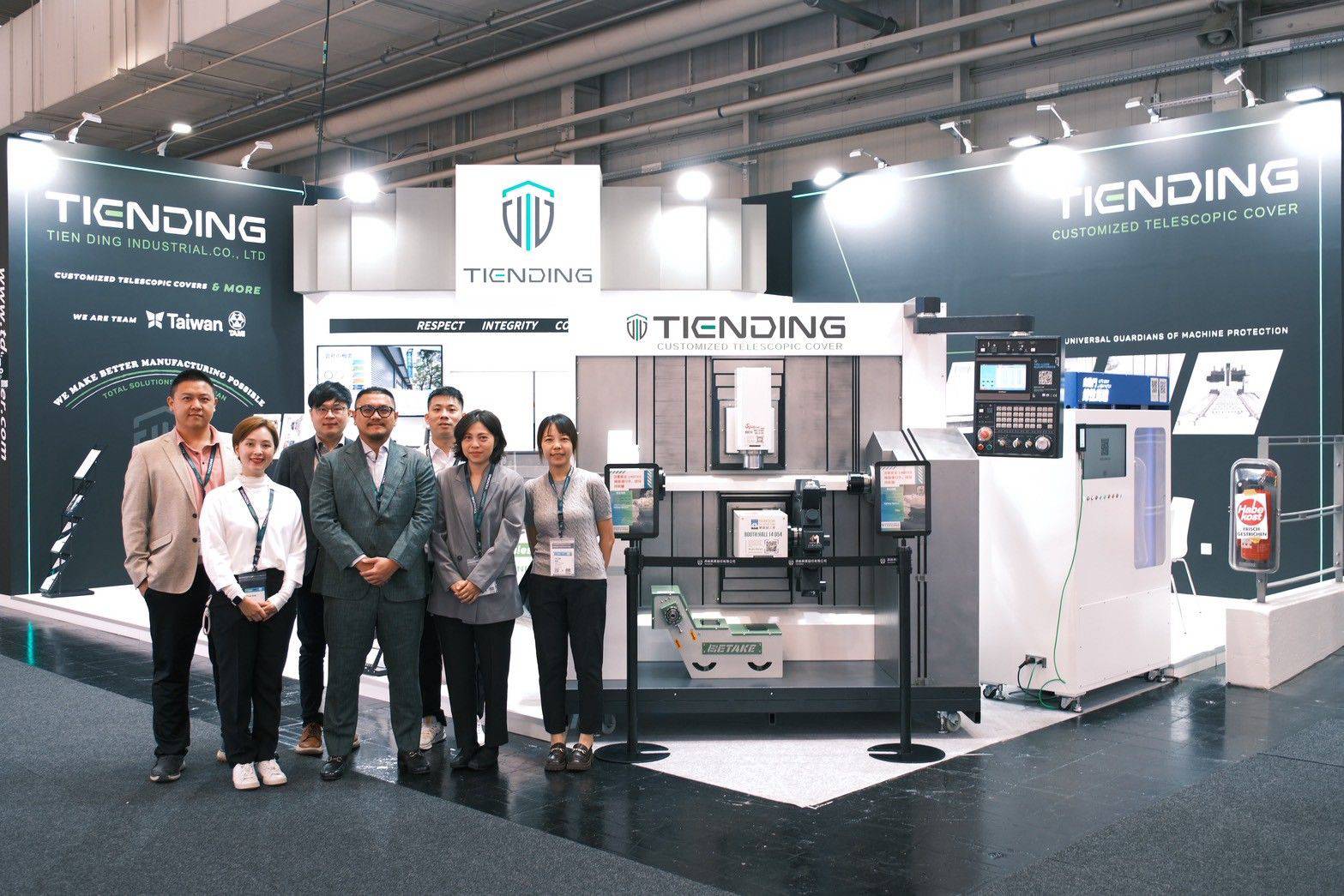
TIEN DING Debuts at EMO — Entering Germany’s Manufacturing Game-Changer with Highly Reliable Protective Cover Solutions
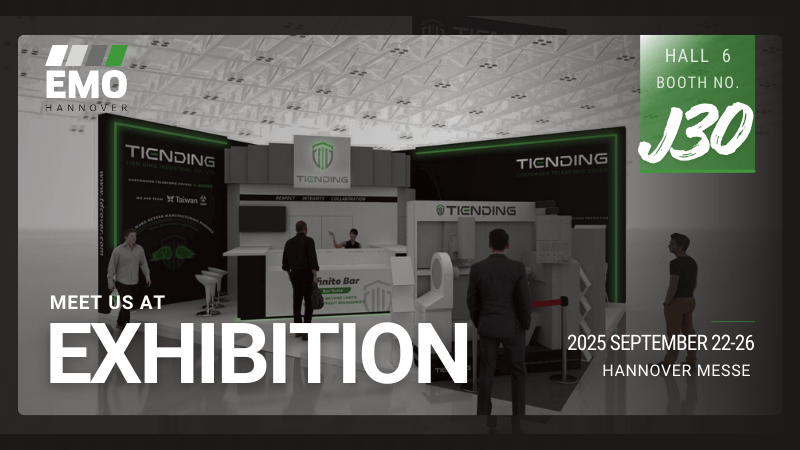
Tien Ding Industrial Partners with Taiwan Suppliers to Shine at EMO Hannover 2025—with an Exhibition Concept Machine Built for Integration