Key Engineering Considerations in Large Vertical Turning Lathe (VTL) Design
How Long Travels and Automation Integration Are Reshaping Telescopic Cover Engineering
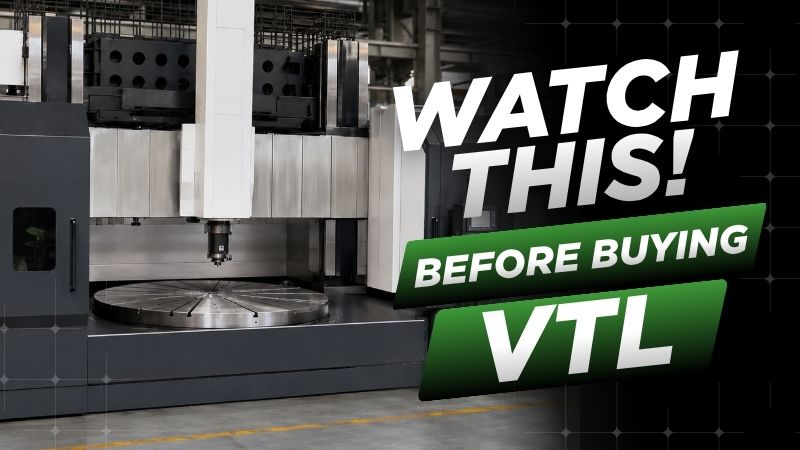
As the machine tool industry continues to evolve toward larger machining capacities and higher levels of automation, Vertical Turning Lathes (VTLs) have progressed far beyond traditional heavy-duty cutting machines. Today, they are highly integrated machining platforms widely used in wind energy, power generation, aerospace, shipbuilding, and the machining of large structural components.
As workpiece dimensions continue to increase, VTL manufacturers face increasingly demanding engineering requirements. Machine development is no longer focused solely on spindle performance and structural rigidity. Instead, greater emphasis is placed on overall system reliability, long-term operational stability, and maintenance efficiency.
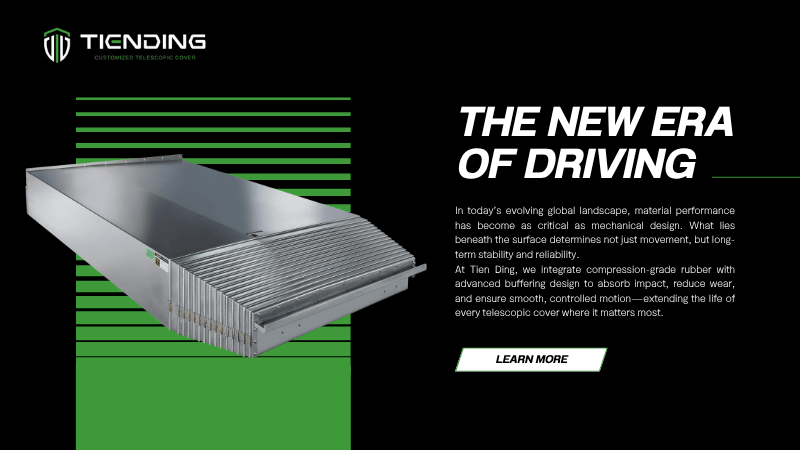
Within this evolution, telescopic covers (also commonly referred to as way covers) have become far more than simple protective components. They now play a vital role in protecting guideways, preserving motion accuracy, reducing maintenance requirements, and ensuring reliable machine operation throughout the equipment's service life.
Long Travels Create New Engineering Challenges for Telescopic Covers
One of the defining characteristics of modern large VTLs is the continuous increase in table diameter. As rotary tables expand to five meters or more, the crossbeam must cover a significantly larger machining envelope, resulting in much longer travel distances.
For telescopic covers, these extended travels introduce several engineering challenges:
- Longer overall cover length
- Increased stacking height of multiple cover segments
- Higher risk of structural deflection across long spans
Simply increasing sheet thickness to improve rigidity is rarely the ideal solution. While thicker panels increase structural stiffness, they also increase moving mass, placing greater loads on drive systems and accelerating wear over time.
Instead, modern telescopic cover engineering focuses on optimizing cross-sectional geometry, reinforcement design, and segment distribution to achieve an effective balance between rigidity and weight.
W-Axis Travel Presents Additional Design Challenges
Beyond horizontal movement, the W-axis vertical lifting system introduces another layer of complexity.
As machine height increases, telescopic covers must protect larger vertical surfaces over extended travel distances. Under these conditions, engineers must address several critical issues:
- Increased structural weight due to larger cover surfaces
- More complex load distribution across multiple cover segments
- Gravity directly affecting motion stability during vertical travel
Without proper structural design, the cover may gradually sag under its own weight, increasing friction and causing unstable movement, particularly around mid-stroke positions and during acceleration or deceleration.
Successful W-axis telescopic cover design therefore requires careful consideration of lightweight structural concepts, guided support systems, and optimized load distribution to maintain smooth motion over long vertical travels.
Heavy Cutting Environments Demand Better Wear and Sealing Performance
Large VTLs operate under extremely demanding machining conditions. Heavy cutting generates not only large volumes of chips but also high-impact debris and continuous coolant exposure.
Over time, telescopic covers must resist:
- Repeated impact from large metal chips
- Continuous coolant exposure
- Fine abrasive particles entering internal mechanisms
Once chips and contaminants penetrate the cover system, internal friction increases significantly, accelerating wear and reducing motion smoothness. Damaged sealing elements further reduce protection effectiveness, creating a cycle of increasing contamination and component degradation.
For this reason, modern telescopic cover design should simultaneously optimize:
- Sealing performance
- Chip evacuation paths
- Wear-resistant materials
- Internal structural protection
These considerations help maintain long-term reliability while minimizing maintenance requirements.
Automation Is Reshaping Protection System Design
Many modern VTL manufacturers are introducing automated functions such as automatic chuck changers, robotic loading systems, and other automation modules.
While these technologies improve productivity, they also make machine layouts considerably more complex.
As automation increases, telescopic covers must coexist with:
- Multiple moving mechanisms
- Reduced installation space
- Increased interference risks
If protection systems are only considered after the machine structure has been finalized, engineers often encounter space conflicts, installation restrictions, and motion interference that require costly redesigns.
For this reason, telescopic cover planning should become part of the machine's overall engineering strategy from the earliest design stage.
The Industry Is Moving from Late Installation to Early Engineering Integration
Traditionally, telescopic covers were designed after the primary machine structure had already been completed.
However, this approach is becoming increasingly unsuitable for today's large VTL platforms.
Current engineering trends show that machines featuring long travels, multiple motion axes, and automation systems benefit greatly when telescopic covers are incorporated during the initial design phase.
Early engineering collaboration allows designers to evaluate:
- Travel and retraction space
- Structural interference
- Motion simulation
- Load distribution
- Installation accessibility
- Future maintenance requirements
By integrating these considerations early, manufacturers can significantly reduce redesign costs while improving machine reliability and long-term performance.
Tien Ding's Engineering Approach to Large VTL Telescopic Covers
At Tien Ding Industrial Co., Ltd., we believe that telescopic covers should never be viewed as independent sheet metal components. Instead, they should be engineered as an integral part of the entire machine protection system.
With years of experience in designing telescopic covers and way covers for large CNC machine tools, our engineering team works closely with machine builders to optimize:
- Long-travel cover structures
- Lightweight yet rigid designs
- Guideway protection
- Chip management
- Coolant control
- Motion stability
- Service life
By participating earlier in machine development, we help OEM manufacturers reduce engineering risks while improving overall machine performance.
Conclusion
As Vertical Turning Lathes continue to become larger, smarter, and more automated, telescopic covers have evolved from simple protective accessories into essential engineering systems.
For modern VTLs, long travels, large protective surfaces, heavy-duty cutting environments, and increasingly complex automation all place greater demands on protection system performance.
Machine builders that integrate telescopic cover engineering early in the design process are better positioned to improve guideway protection, motion stability, maintenance efficiency, and long-term machine reliability.
If you are developing a next-generation Vertical Turning Lathe or upgrading an existing VTL platform, Tien Ding Industrial Co., Ltd. can provide customized telescopic cover engineering solutions tailored to your machine's travel, structural layout, and application requirements. Contact our engineering team to discuss how optimized telescopic cover design can enhance the reliability and performance of your machine.
Frequently Asked Questions (FAQ)
Q1. Why are telescopic covers more challenging to design for large Vertical Turning Lathes?
A: Larger VTLs require significantly longer travel distances and wider protection areas, increasing structural loads, cover weight, and the complexity of maintaining smooth, stable movement.
Q2. How does W-axis travel affect telescopic cover performance?
A: Long vertical travel introduces additional gravitational loads, making lightweight structural design and guided support systems essential for maintaining smooth operation.
Q3. Why shouldn't thicker steel simply be used to improve rigidity?
A: Increasing material thickness also increases moving mass, motor load, and long-term wear. Optimized structural geometry is generally a more effective engineering solution.
Q4. How does automation influence telescopic cover design?
A: Automation modules reduce available installation space and increase interference risks. Early integration helps ensure that protection systems operate reliably alongside automated mechanisms.
Q5. Why should telescopic covers be planned during the early stages of machine development?
A: Early engineering integration allows designers to optimize travel space, structural layout, chip evacuation, and maintenance accessibility before the machine structure is finalized, reducing redesign costs and improving overall system performance.
Catagory
Recent News
Why Telescopic Covers Must Be Involved Earlier in Turn-Mill Machine Design?
From AI Server Racks to CNC Machine Covers: Why High-Precision Sheet Metal Bending Has Become a Critical Manufacturing Capability